report regular AI use
Organizations using AI in at least one business function still need a repeatable way to turn adoption into daily work.
Read the source McKinsey · State of AI 2025Your teams keep providing the business data they already know. Skiller turns it into governed AI results in minutes—not days—without asking every employee to learn prompts, models, or new AI tools.
Most employees already know the correct source data, files, criteria, dates, and business context. The barrier begins when the same people are also expected to learn prompt construction, model selection, command-line tools, local project structure, AI output handling, and governance rules.

These signals point to the same enterprise constraint: AI can be available everywhere and still fail to become useful daily work.
Organizations using AI in at least one business function still need a repeatable way to turn adoption into daily work.
Read the source McKinsey · State of AI 2025The workforce gap is an operating constraint. A no-prompt interface lets business expertise stay in the workflow.
Read the source World Economic Forum · Future of Jobs 2025The adoption path has to fit the workday. Skiller removes prompt engineering from the employee’s task list.
Read the source Microsoft · Work Trend Index 2025Sources: McKinsey State of AI 2025, World Economic Forum Future of Jobs 2025, and Microsoft Work Trend Index 2025.
Forms, files, criteria, dates, and business instructions.
Skiller sends the stored request to the assigned workstation Runner, local project, and approved AI provider.
Users receive the output, logs, status, and downloadable files in the same Web App.
Owns users, permissions, Apps, requests, prompts, and outputs.
Owns local project paths, approved skill paths, and AI execution.
Keeps workstation profiles mapped, healthy, and updated.
Each stakeholder keeps the part they should own. Skiller connects those responsibilities into one repeatable service.

Reduce repetitive knowledge-work cycle time from days to minutes.
Preserve approved tools, local project context, access controls, and runtime ownership.
Release expensive staff capacity from recurring manual analysis and report preparation.
Package the best internal AI skills once and distribute them as controlled Apps.
Continue supplying familiar business data without learning prompt engineering.
Each skill can affect a different group, run at a different frequency, and save a different amount of time. Build a company-wide list and see the combined annual capacity.
Saved only in this browser and never sent to Skiller. Actual value depends on workflow volume, current cycle time, labor cost, implementation quality, and adoption.
Skiller separates cloud coordination from workstation execution. That makes ownership visible: the Web app governs who can request work and what is returned; the authenticated Runner owns the production project and executes the approved skill locally.
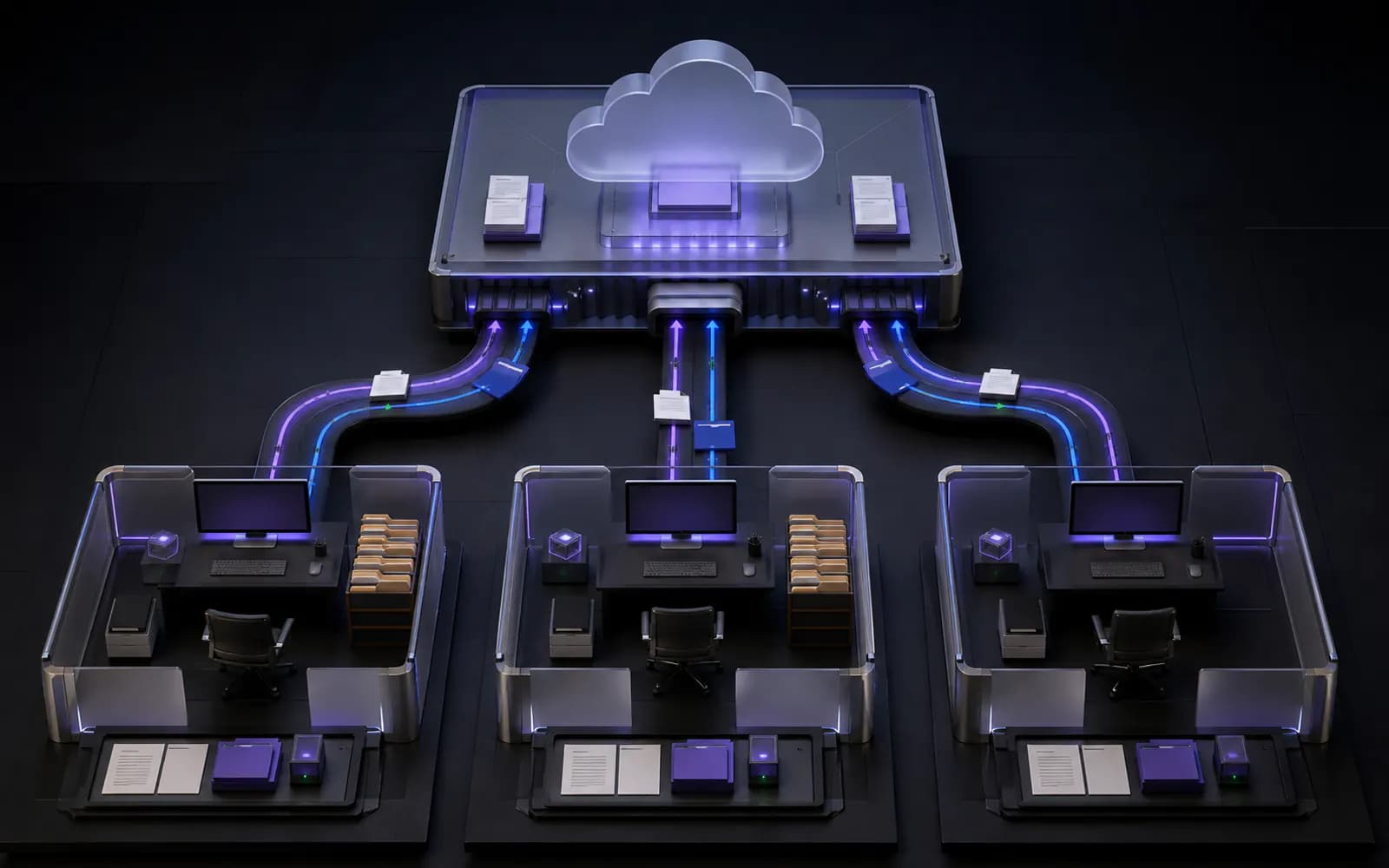
Access is checked in APIs and execution paths, not only hidden in the interface.
Users, Apps, Runners, requests, groups, files, and settings stay bound to their workspace.
The final execution prompt is materialized and stored when a request is submitted.
Each Runner is authenticated, workspace-bound, and mapped to an owned workstation profile.
The Runner owns local project and skill paths; the cloud Web app does not invent them.
App bundles arrive as private drafts, and model-generated bundle content is treated as untrusted.